What the AI crying trend actually is
Take one normal selfie. Feed it to an image-to-video AI. Out comes a ten-second scene from a film you were never in: you, on a wet street at night, smiling at someone off-camera — and then the smile breaks. Your eyes fill, tears run down your cheeks, and you turn and walk away under the street lamps while sad piano plays.
That's the whole trend. It works because it's beautiful and ridiculous at once: a cinematic heartbreak, captioned with something tiny like a text that just said “k”.
What it looks like
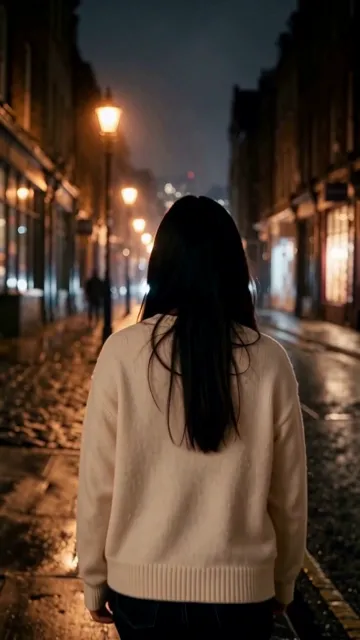
A real, unedited 10-second example made on aicrying.org from one selfie (the person is an AI-generated sample):
Night Street · Full tears
The three beats every viral version uses
Watch twenty of them back to back and the structure barely changes:
- The smile (00:00) — You look just past the camera with a soft, hopeful smile — as if at someone you love. Warm light, a quiet street, nothing wrong yet.
- The break (00:03) — The smile wavers. Your chin trembles, your eyes go red and glassy, fill with water — and real tears spill over and run down both cheeks.
- The walk away (00:07) — You press your lips together, turn your back to the camera and walk slowly down the street under the lamps. Cut to black.
 00:00
00:00I thought you'd stay.
 00:03
00:03I really thought you'd stay.
 00:07
00:07…
Beat 1 · 00:00
The smile
You look just past the camera with a soft, hopeful smile — as if at someone you love. Warm light, a quiet street, nothing wrong yet.
Beat 2 · 00:03
The break
The smile wavers. Your chin trembles, your eyes go red and glassy, fill with water — and real tears spill over and run down both cheeks.
Beat 3 · 00:07
The walk away
You press your lips together, turn your back to the camera and walk slowly down the street under the lamps. Cut to black.
Most clips run 8–12 seconds. Shorter and the tears don't have time to land; longer and the walk-away drags.
What app is the AI crying trend made with?
The trail mostly leads to CapCut: many reposted clips still carry its corner mark, and its AI crying template is the one tutorials point to. Dreamina — CapCut's sister AI studio, running ByteDance's Seedance model — is the second big source, used by people who want to write their own prompt. Kling and other image-to-video apps make it too.
If you'd rather not install anything, aicrying.org runs the same kind of model in your browser with the three beats already written. For DIY, our free AI crying templates and prompts work in all of them.
How it differs from the 2022 crying filter
| 2022 crying filter | 2026 AI crying trend | |
|---|---|---|
| What it is | An AR lens (Snapchat) drawn over your live camera | A brand-new video generated from one photo |
| Scene | Wherever you are | A new cinematic location: night street, rain, window |
| Tears | Cartoon-ish, stuck to your face | Real-looking tears that well up and roll |
| Story | None — it's a mask | Smile → break → walk away |
More on the filter side — including free photo filters — in our AI crying filter guide.
What people caption their AI crying videos with
The joke is always in the gap between the drama and the caption. The common formats:
- “POV: you finally said it and they didn't say it back”
- “me after spending my whole salary on a lip gloss”
- “when you look this good crying, it's not even sad anymore”
- “the way I cried over a guy who calls me “bro””
- “me reading “k” after a 3-paragraph text”
- “when the barista spells your name right”
The main versions
- Night Street Walk-Away — Smile → tears → you turn and walk away under warm street lamps. The version that made the trend. Prompt →
- Close-Up Tears Effect — A tight close-up: the smile fades, eyes redden and glisten, tears roll down. Keeps the focus on your face. Prompt →
- Holding Back Tears — Glassy eyes, a brave smile, one tear escapes. Popular for the “when you see your crush with someone else” captions. Prompt →
- Crying in the Rain — Neon signs, steady rain — tears and raindrops running together as you look up into the sky. Prompt →
- Car Window at Night — Sitting in a parked car, city lights sliding across your face, tears you didn't want anyone to see. Prompt →
- Train Station Goodbye — A platform, a departing train, a wave that turns into tears. The long-distance heartbreak version. Prompt →
Timeline
| When | What happened |
|---|---|
| 2022 | Snapchat's crying lens goes viral — a real-time AR mask, not AI video. |
| 2025 – mid 2026 | “Cry face” AI portraits (watery eyes, dramatic light) and AI hug / emotional videos become a staple. |
| ~21 Sep 2026 | The animated version takes off: one selfie → smile, tears, walk away, mostly via CapCut's AI crying template. |
| Late Sep 2026 | Spreads across Reels and TikTok from Turkish, Arabic, Indonesian, Filipino and German creators; tutorials and prompt pages follow. |
| Oct 2026 | Variants multiply — holding back tears, crying in the rain, couples and friends versions. |
Sources
- TikTok — AI crying face filter app (discover page)
- TikTok — AI videos crying tutorial (discover page)
- Kavel — AI crying trend 2026: what app and how to make it
- Media.io — CapCut crying AI video prompts
FAQ
When did the AI crying trend start?
+
It rose from around 21 September 2026 and spread across Instagram Reels and TikTok in the last week of September, with many early clips posted by Turkish, Arabic, Indonesian, Filipino and German accounts before English-speaking creators picked it up.
What app is the AI crying trend made with?
+
Mostly CapCut — its AI crying template or effect — and Dreamina, both built on ByteDance's Seedance video model. Kling and other image-to-video apps also work. aicrying.org makes it in the browser from one selfie.
Why are people posting themselves crying?
+
Because it's funny and pretty at the same time. The clips look like the last scene of a sad film, and the captions undercut them — fake heartbreak, tiny tragedies, or simply how good you look crying.
Is the AI crying trend the same as the Snapchat crying filter?
+
No. The 2022 Snapchat lens drew a crying face over your live camera. The 2026 trend generates a whole new video from one photo — a new location, cinematic light, tears that roll and an exit.
What song is used in the AI crying trend?
+
No single song. Most creators use slow sad piano or a trending heartbreak sound, added in TikTok, Instagram or CapCut after the clip is made.
Skip the prompts
Get your AI crying video made for you
Upload one selfie, pick a scene, get a 10-second 9:16 video in minutes. From $5.99, no app, no subscription.
Make my AI crying video →